
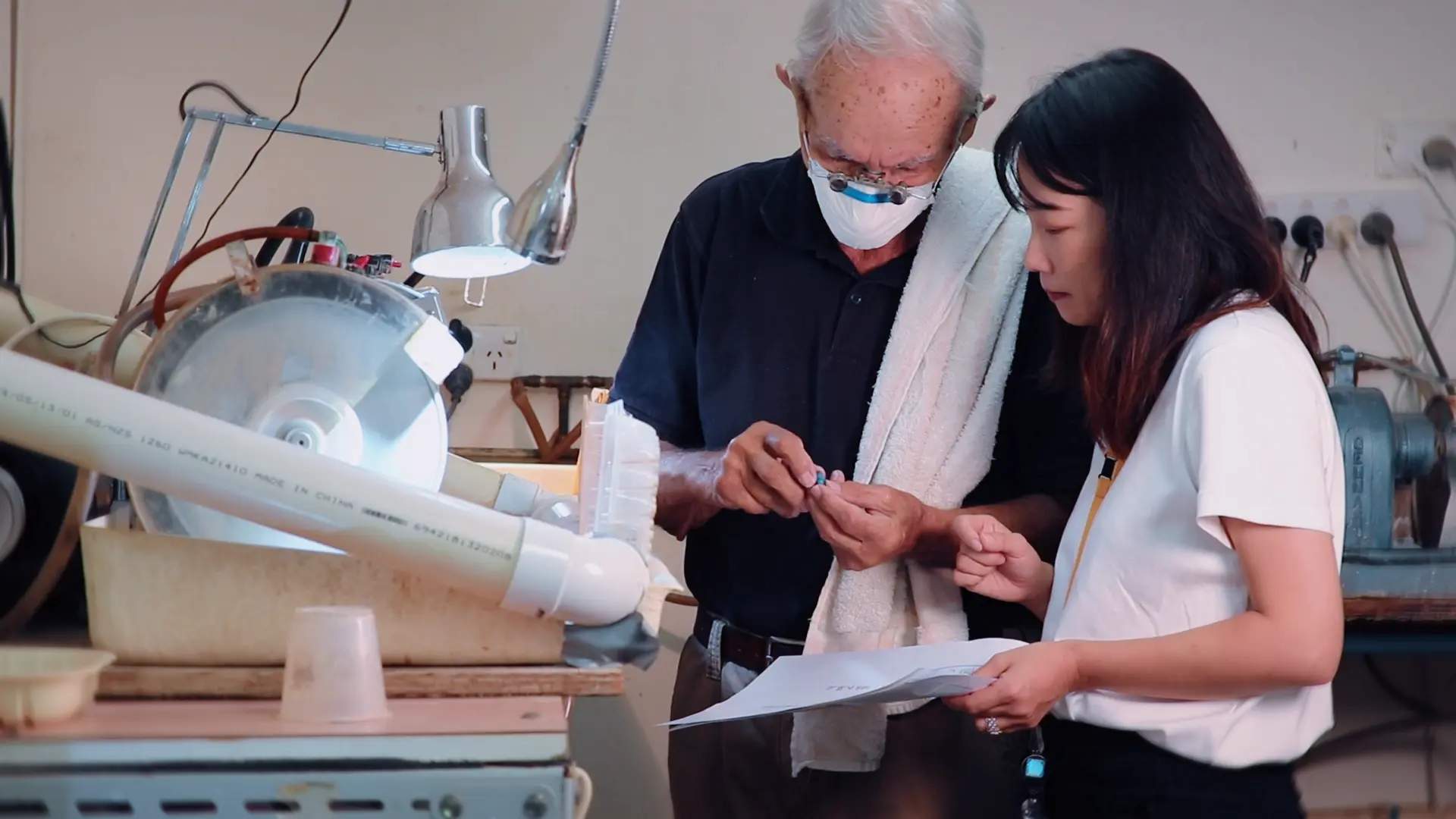
Written by Cindy Xu Jewellery editorial team, updated 2026.
Introduction to opal value
Opals can be affordable, breathtaking, or genuinely investment level. Unlike diamonds (where pricing leans heavily on standardised grading grids), opal value is set by a combination of visual factors and craftsmanship, and there’s no single universal formula that guarantees the “right” price.
A practical way to think about opal pricing is to have the sellers assess a stone and assign a price per carat, then multiply by the opal’s carat weight to reach a base stone price. The challenge is that every opal is unique, two stones of identical weight can be worlds apart in beauty and value.
This guide translates gemmology concepts into plain English for opal jewellery buyers, covering the biggest value drivers, realistic price ranges, how to inspect opals online and common traps so you don’t’ feel lost at an opal store.
Key factors of opal price
Below are the buyer friendly valuation factors most consistently cited across Australian opal sellers and educators (The Opal Association’s nomenclature resources, and international gemmology references.)
Opal type
Before judging “beauty,” confirm what you’re actually buying, because construction has a major effect on both value and care requirements. Natural opal types accroding to The Opal Association distinguishes Natural opal Type 1 (solid), Type 2 (boulder opal) and Type 3 (matrix opal) [2]
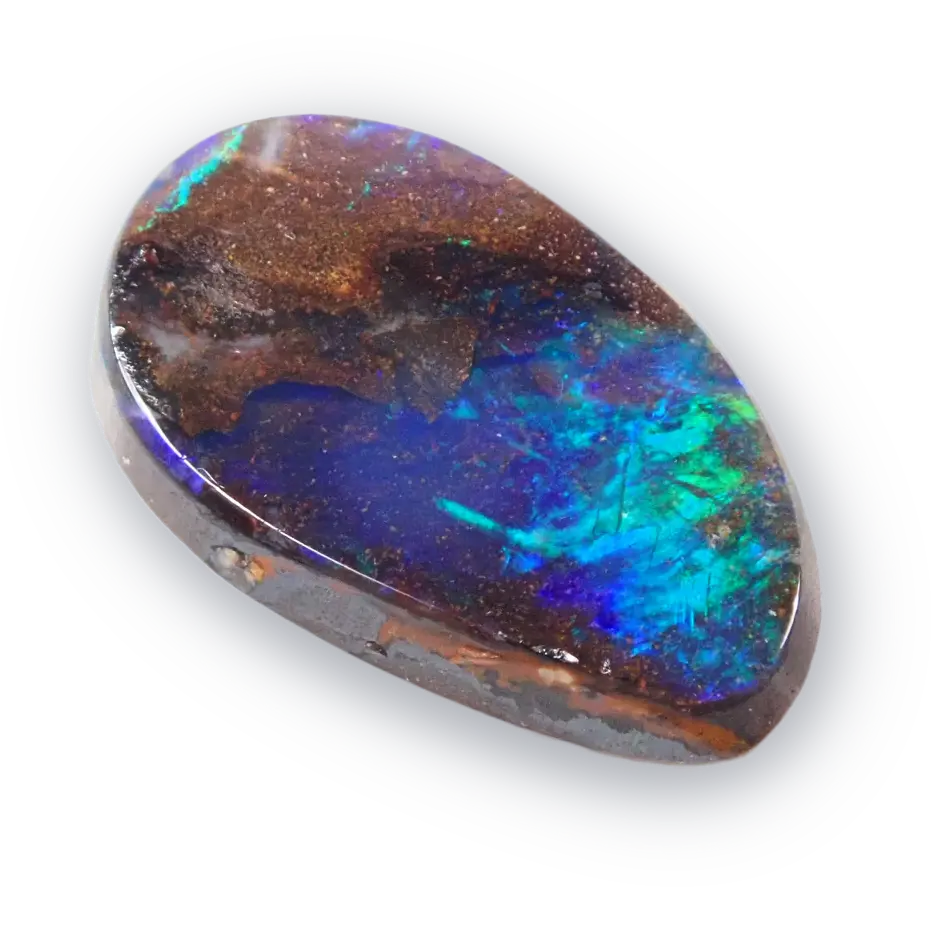
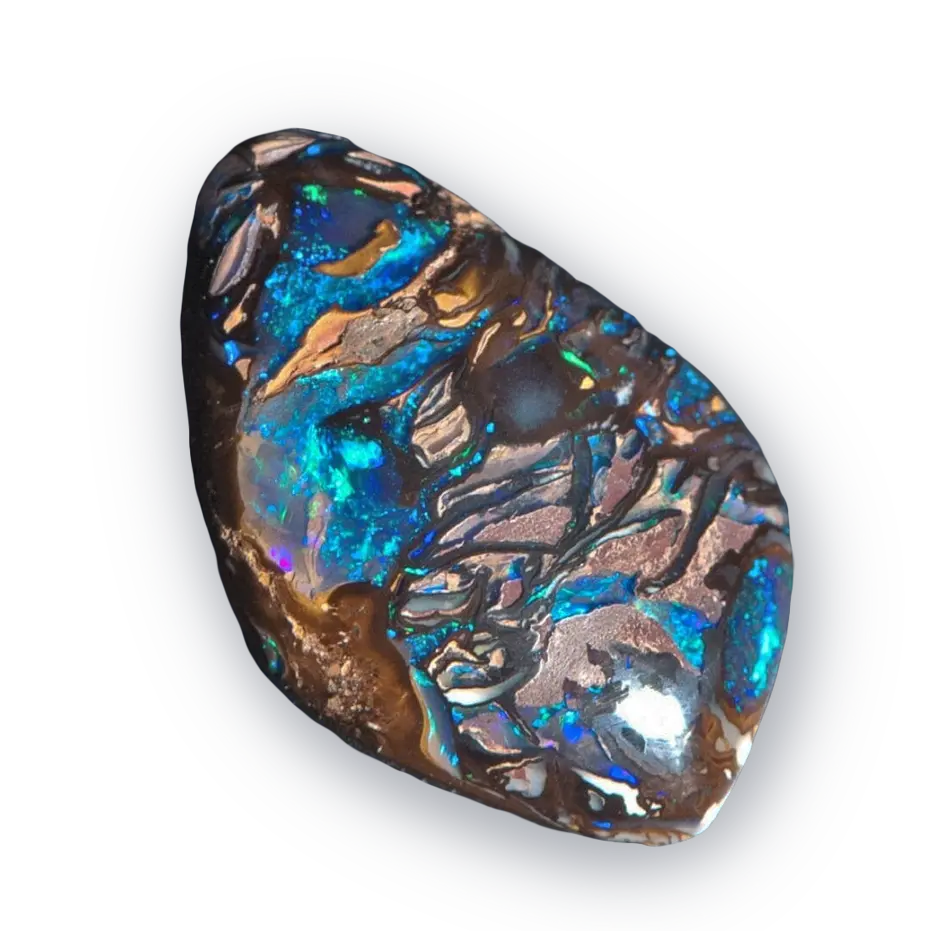
Natural Opal Type 1 (substantially homogeneous opal presented as one piece). Also know as solid opal These includes: Black opals, Semi-black opals, light opals, crystal opals Type 2 (boulder opal) where opal is naturally attached to host rock. These includes: Boulder opals, Yowah nuts Type 3 (matrix opal) where opal is diffused through the host rock.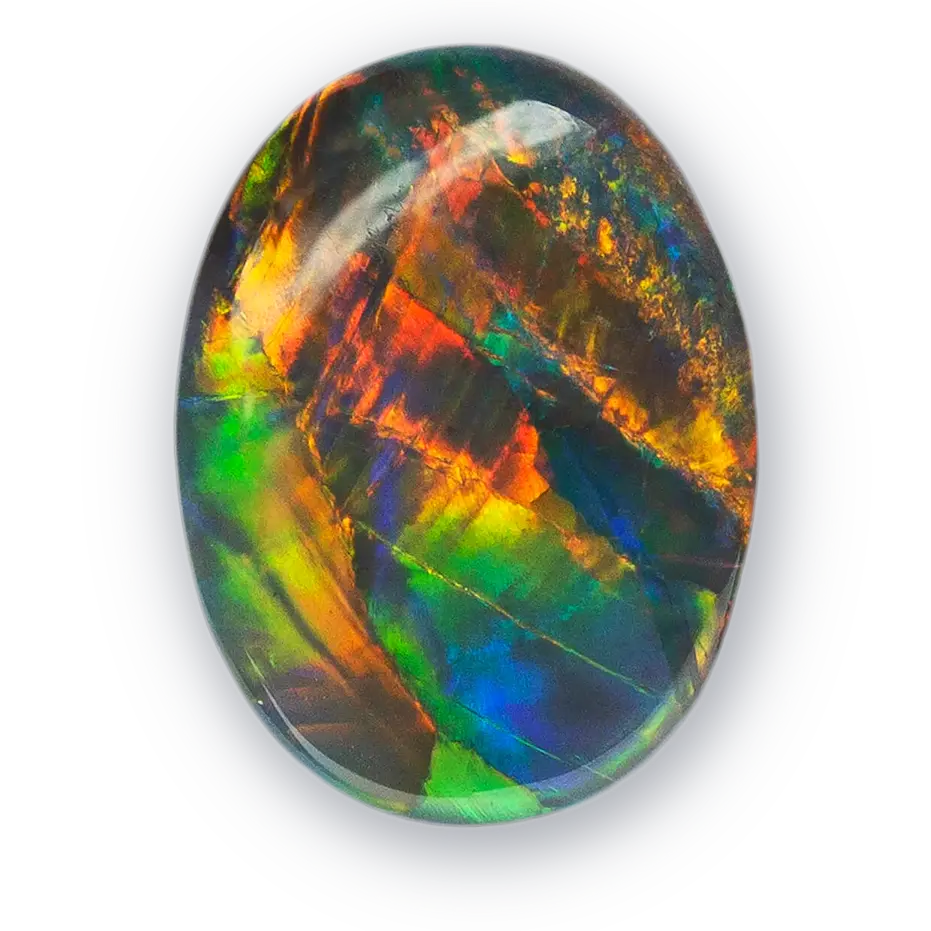
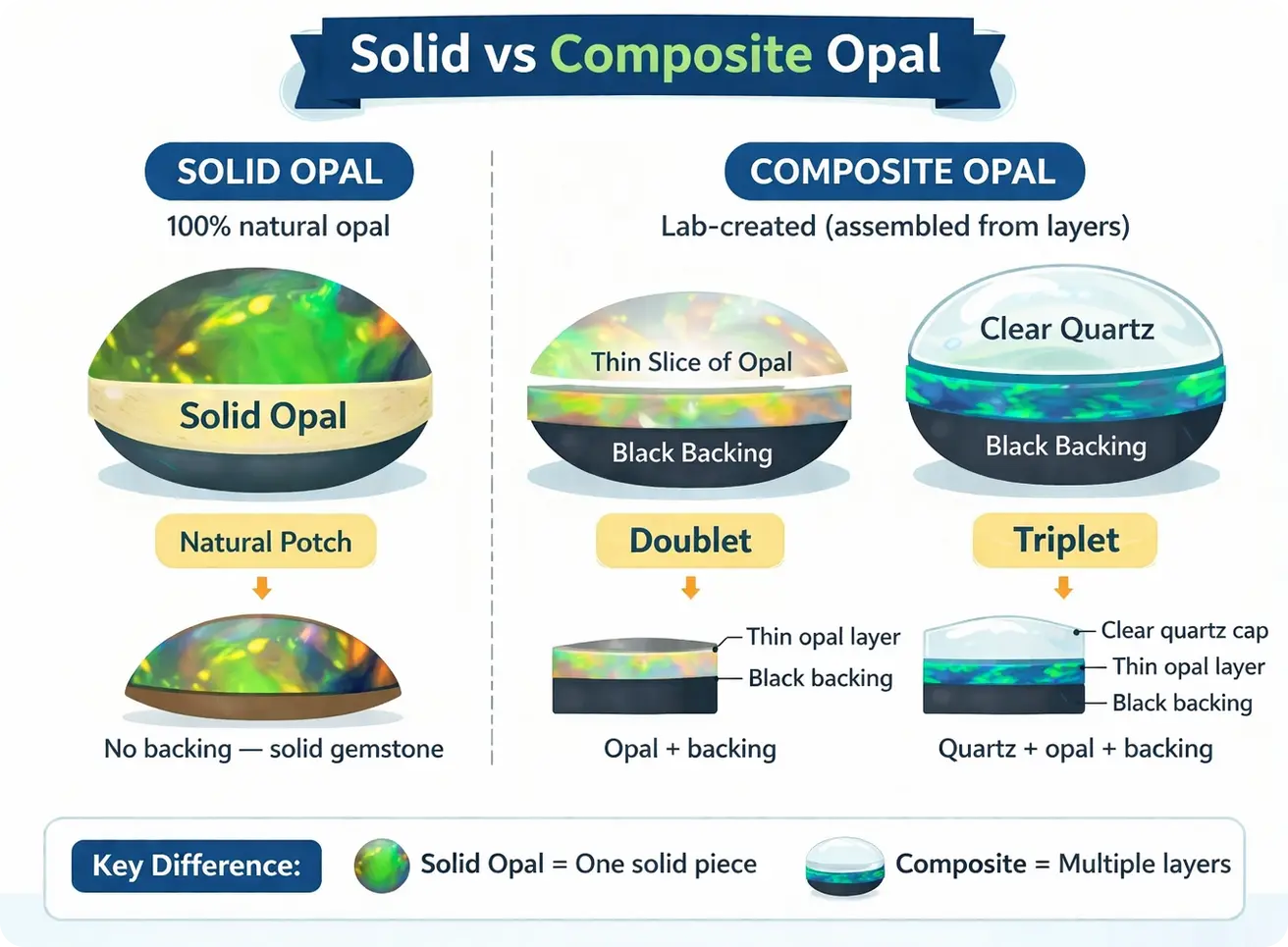
Solid vs composite (doublets/triplets) ❗
A solid opal is a single piece (possibly with natural host rock in boulder opal). A doublet is a thin slice of natural opal bonded to a backing, a triplet adds a transparent top layer. Doublets/triplets are assembled with only a thin slice of natural opal and are generally less valuable than solid stones. CIBJO’s standard is explicit that these must be described as “opal doublet” or “opal triplet” (not disguised terms). [3]
Doublets usually sell for 15 to 35 percent of a similar-looking solid opal’s price, though the finest versions can reach 50 percent. Triplets are significantly more affordable, often valued at just 1 percent of a solid stone with a comparable appearance.
Body tone
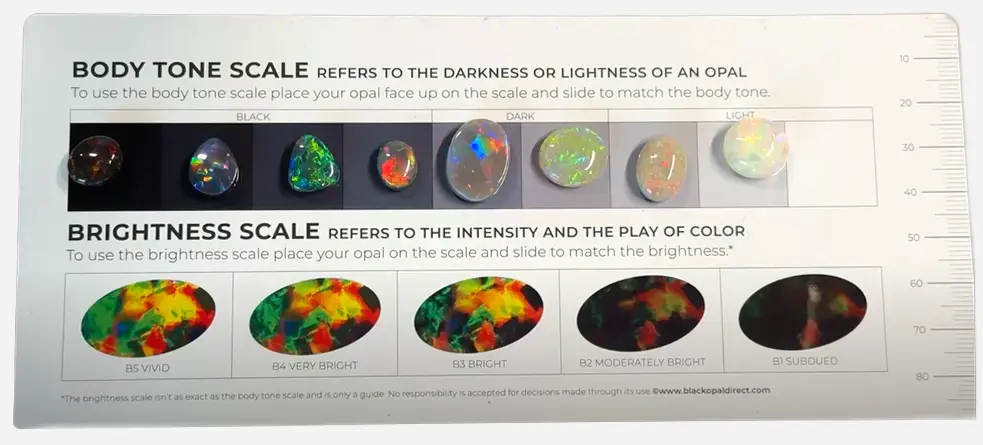
Body tone means the background darkness/lightness of the stone when you ignore the flashes of colour. Many Australian sources use a Scale of Body Tone from N1 (darkest) to N9 (lightest/white). [2]
In simple terms, a darker background can make colour flashes look more vivid (more contrast). That’s why black and dark opals are often priced higher than light/white opals, though a spectacular light opal can still be very valuable.

Scale of Body Tone from N1 (darkest) to N9 (lightest/white).
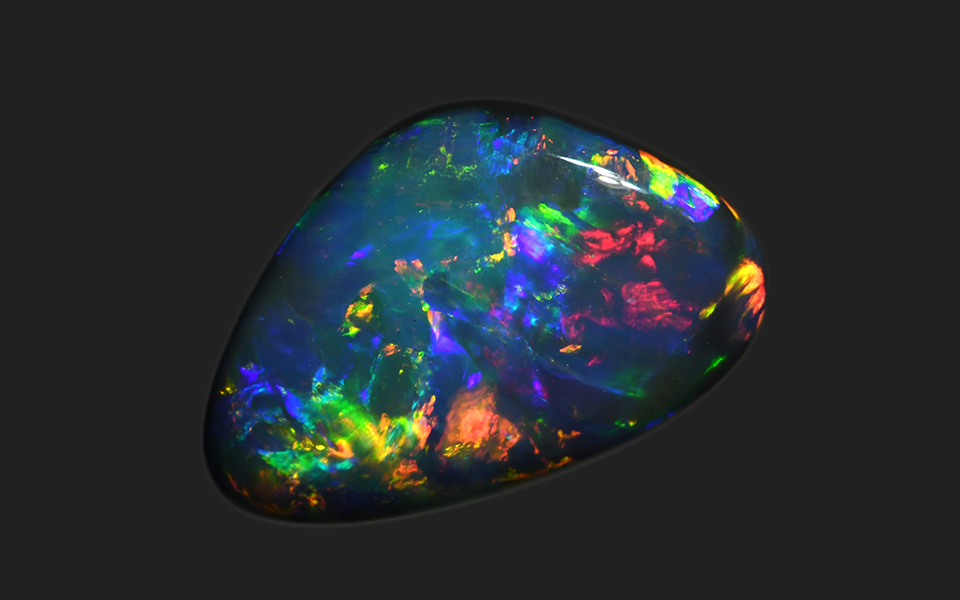
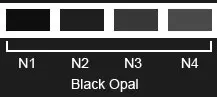
Black Opal is the family of opal which shows a play-of-colour within or on a black body tone when viewed face-up, and may be designated N1, N2, N3 or N4 on the Scale of Body Tone. [2]
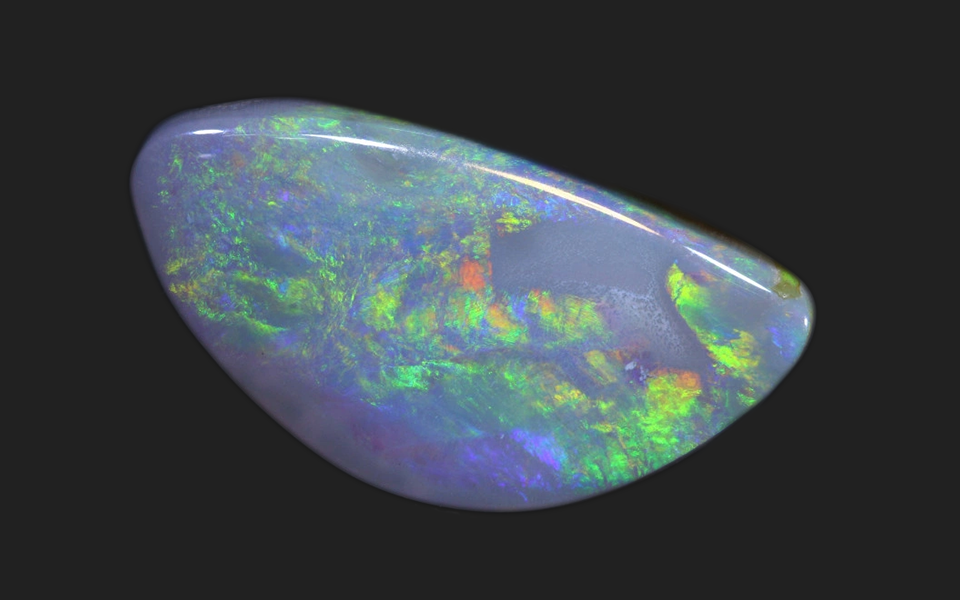
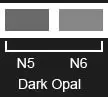
Dark Opal is the family of opal which shows a play-of-colour within or on a dark body tone, when viewed face-up, and may be designated N5 or N6 using the Scale of Body Tone.
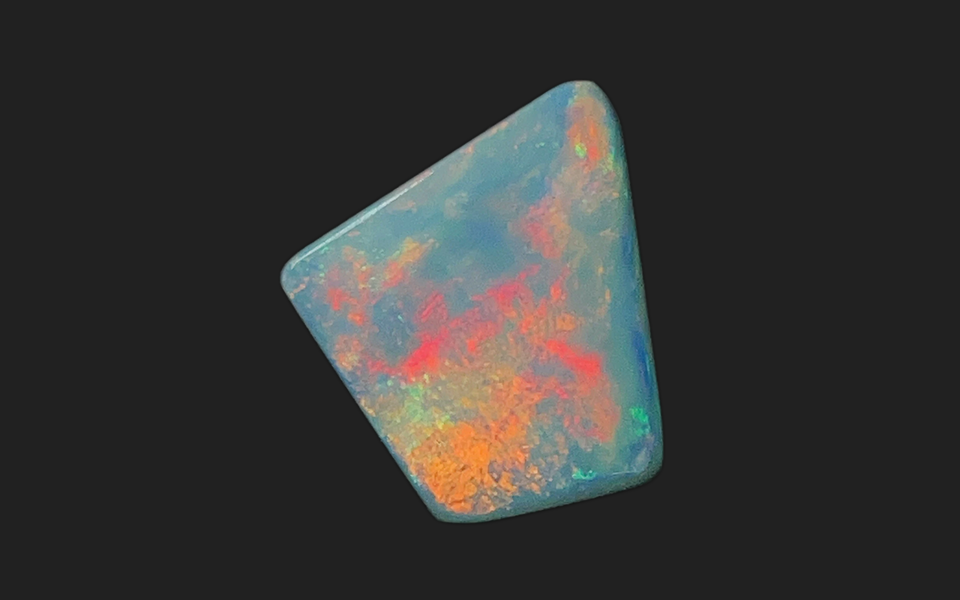
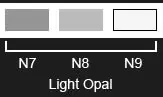
Light Opal is the family of opal which shows a play-of-colour within or on a light body tone, when viewed face-up, and may be designated N7, N8, or N9 on the Scale of Body Tone. The N9 category is referred to as white opal
Body tone examples
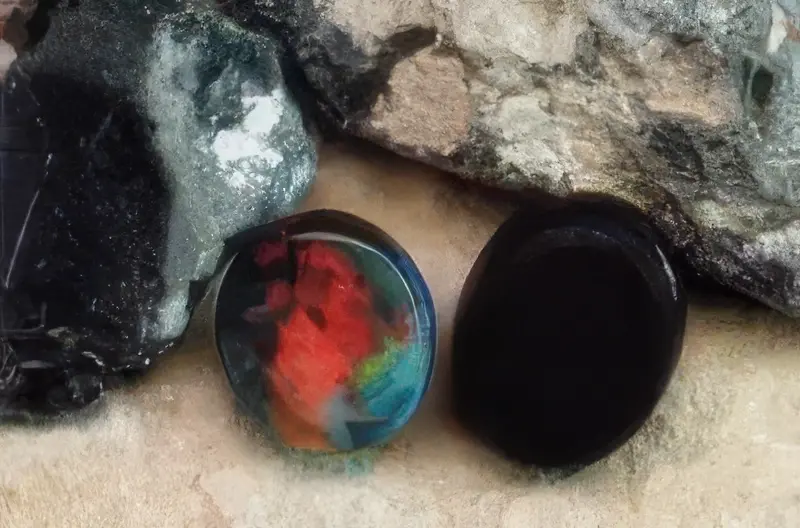
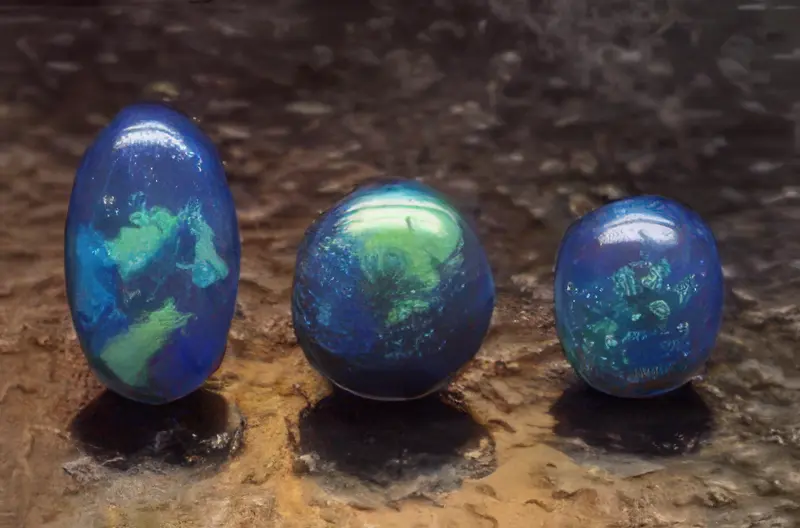
Black opal of N2 body tone and a dominant red orange play-of-colour.
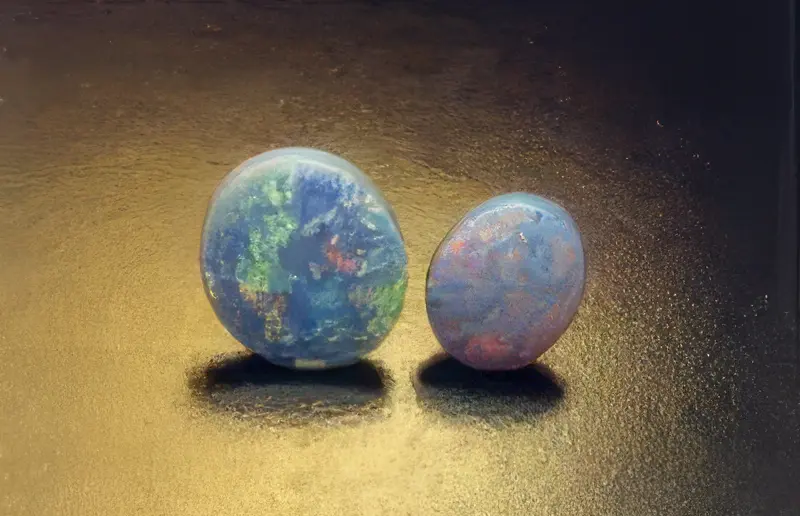
Black opal of N3 body tone and a dominant blue green play-of-colour.
Dark opal of N5 body tone and a green play-of-colour.
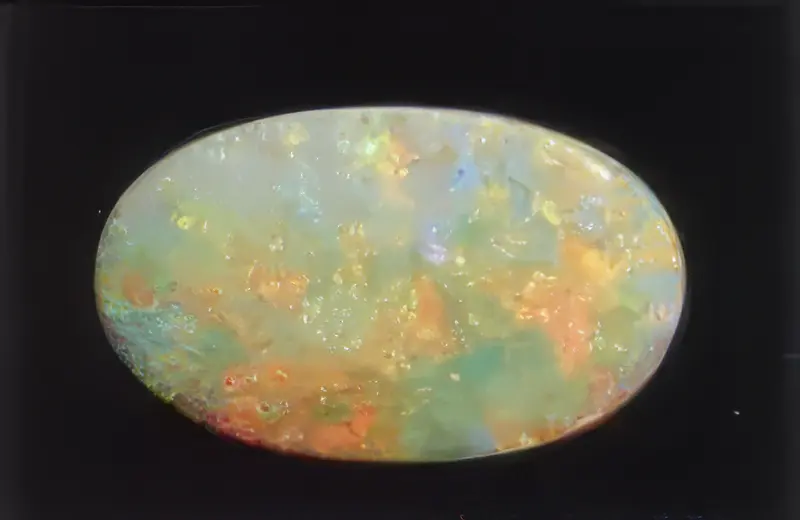
White opal of N1 body tone and a red blue play-of-colour.
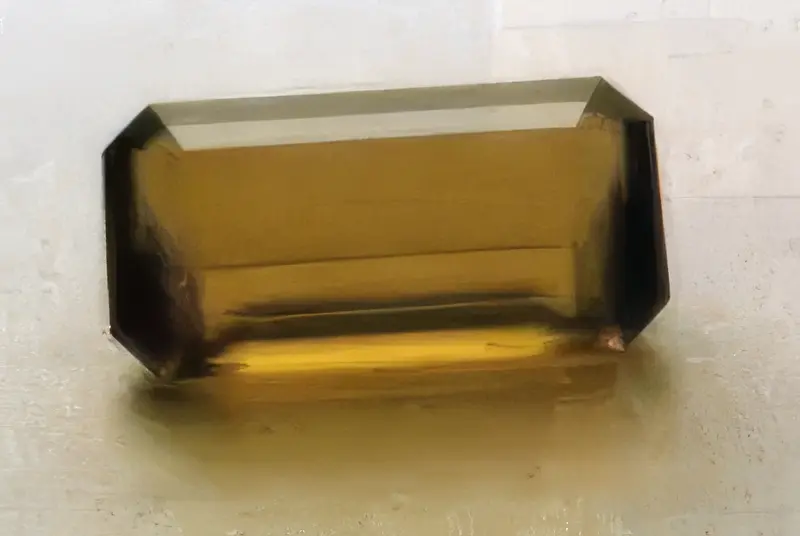
A faceted common ‘sun’ Opal from Australia. Opal which does not exhibit a play-of-colour
Brightness
Brightness is how intense the colours look when viewed face‑up. Brightness varies from B1 (subdued) to B5 (vivid). Even within the same body tone category, brightness, like colours and patterns, can have a major impact on value. For example, a black opal with a vibrant B5 brightness may be more valuable than a black opal with a moderate B2 brightness.
A deep crimson opal is an excellent example. Red is the rarest and most costly opal colour, thus even if an opal is less bright, intense red flashes can increase its worth.
Pattern
Patterns describe the shapes and arrangements of colour patches. Some patterns are considered rarer and command premiums.
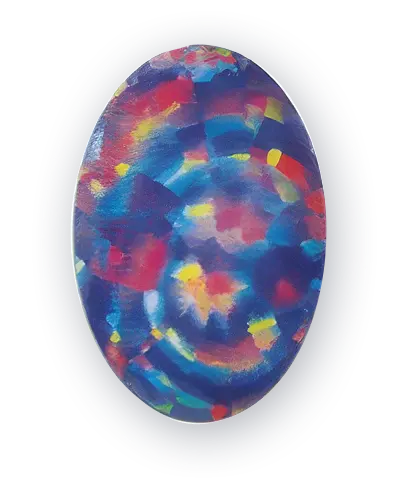
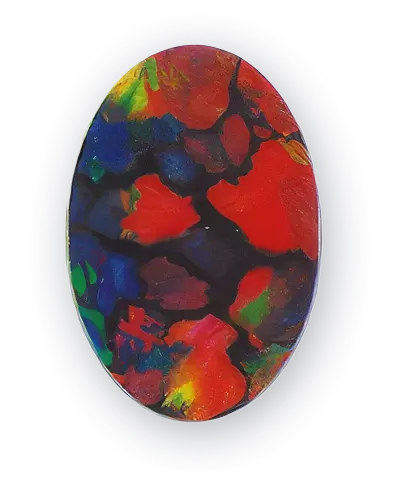
Premium opal patterns are harlequin, flagstone, and Chinese writing, and a true harlequin is extremely rare and sought after. The more distinct, bold, and well-structured the pattern is, the higher the opal value and price.
💲Premium Opal Patterns💲
These patterns are highly sought after in Collector grade opal jewellery and can significantly increase an opal’s worth
Harlequin Pattern
Large, evenly shaped blocks of color arranged like a mosaic or checkerboard. This is the rarest and most valuable pattern, often seen in top-grade Australian black opals.
Flagstone Pattern
Bold patches of color with sharp, straight edges, arranged in a natural but structured way.
Ribbon Pattern
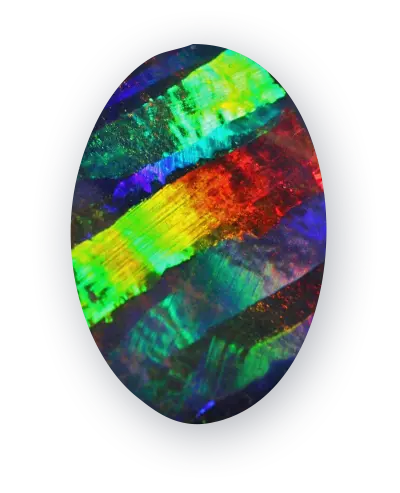
Long, flowing lines of color that move across the stone like silk ribbons.
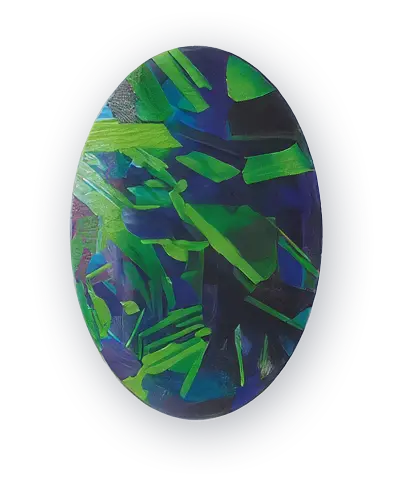
Straw Pattern
Fine, overlapping streaks of color layered across the surface.
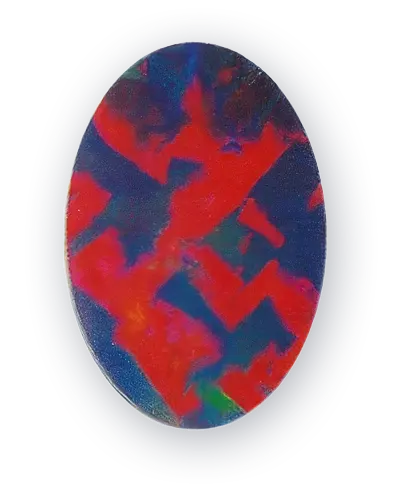
Chinese Writing Pattern
Intricate, thin lines that resemble handwritten characters, highly collectible for their uniqueness.
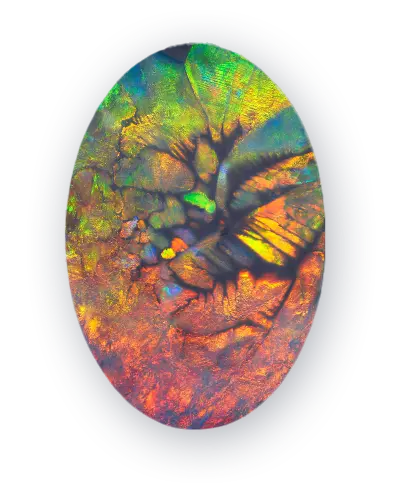
Picture Stone
Natural patterns that resemble landscapes, animals, or scenes. These are especially popular in custom opal jewelry designs due to their storytelling appeal.
High Quality Opal Patterns
These patterns are commonly found in fine opal jewellery and still offer strong value
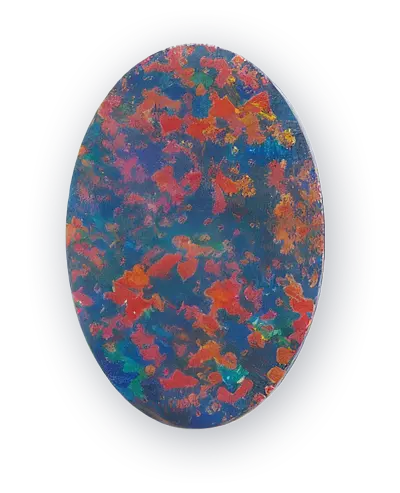
Floral Pattern
A soft, organic spread of color resembling flower petals.
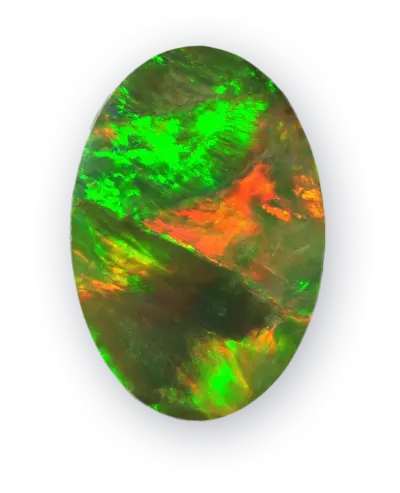
Rolling Flash
Large areas of color that appear to move or “roll” across the stone as it turns, very eye-catching in rings and pendants.
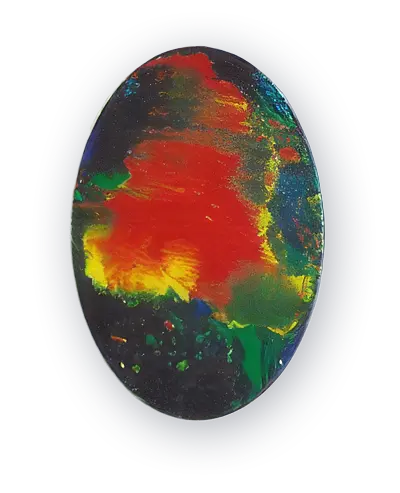
Broad Flash
Bold flashes of color that appear and disappear with movement, creating a dramatic effect.
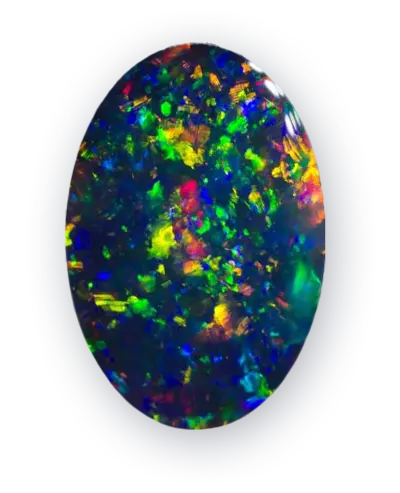
Pinfire Pattern
Tiny, sparkling dots of color scattered across the surface, subtle but elegant.
🔻Lower Value Opal Patterns🔻
Some patterns are less defined and generally considered lower in value. These opals can still be beautiful, but they are usually more affordable and commonly used in entry level opal jewellery.
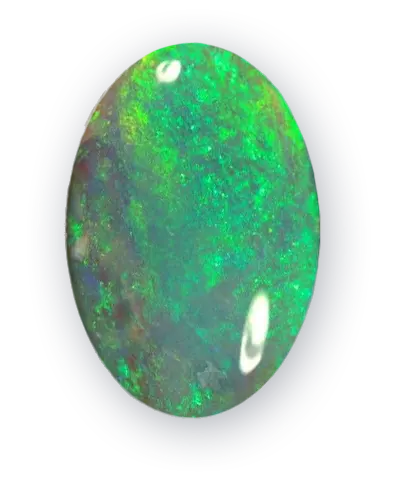
Moss Pattern
Soft, blurred patches of color without clear structure.
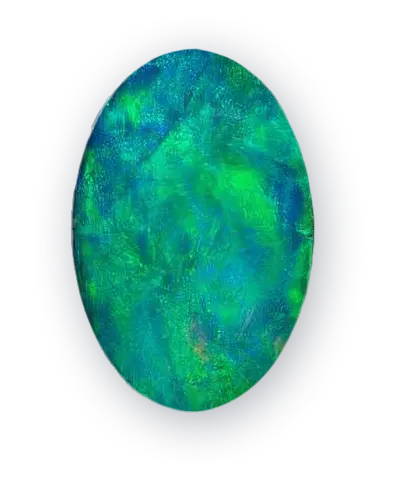
Grass Pattern
Thin, uneven lines that lack brightness and definition.
Transparency and clarity
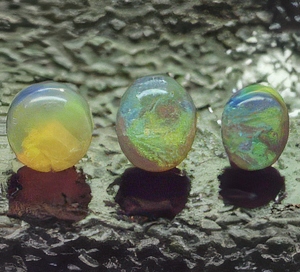
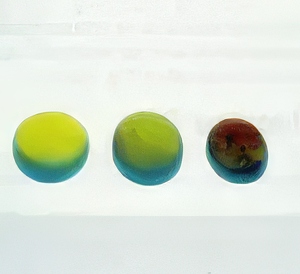
Opal can range from transparent to opaque (gemmologists call this “diaphaneity”). Crystal opal is defined by transparency/semi‑transparency, and that “crystal” refers to appearance, not a crystal structure. Transparent and semi‑transparent material can be highly valued when it also has strong play‑of‑colour and few inclusions. [2]
Crystal opals shown face-up against a black background which enhanced the brilliance of these opals’ play-of-colour. The same crystal opals shown face-up against a reflective background that subdues the opal’s play-of-colour. The same crystal opals viewed in transmitted light. Note the play-of-colour of these opals is hidden, and their true transparency is revealed.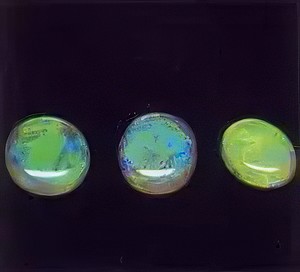
Cut and polish quality
A well cut opal should always appear balanced and symmetrical. Most opals are cut as cabochons (smooth domed tops). The domed surface is essential because it allows the play-of-colour to be seen clearly from multiple angles, enhancing the overall brightness and value of the opal. If the surface is too flat, the stone may appear dull and can be more prone to damage during setting.
Cutting raw opal stone on the other hand, if the dome is too high, it can make the opal difficult to set securely into jewellery. Just like with other premium gemstones such as rubies or sapphires, the cutter’s main focus is to maximize the vibrancy and movement of color. Vibrancy and movement of color. This means the finished gem may look slightly irregular, but it will display a much stronger and more captivating visual effect.
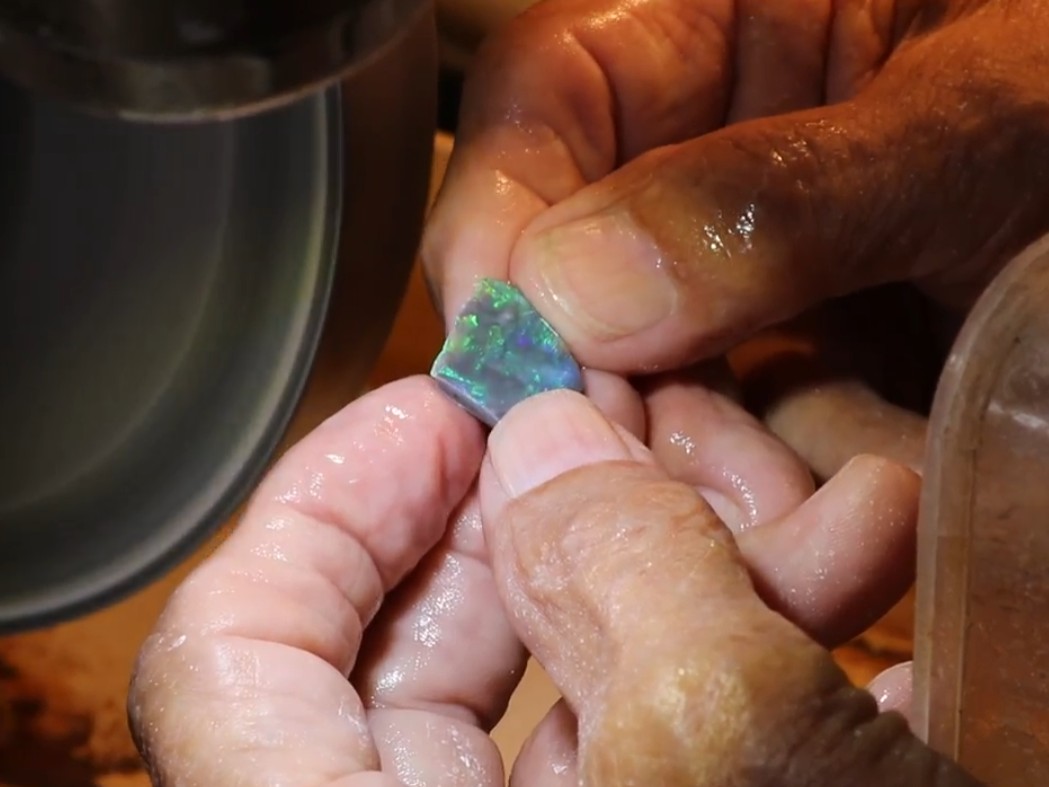
Polishing raw opal stone
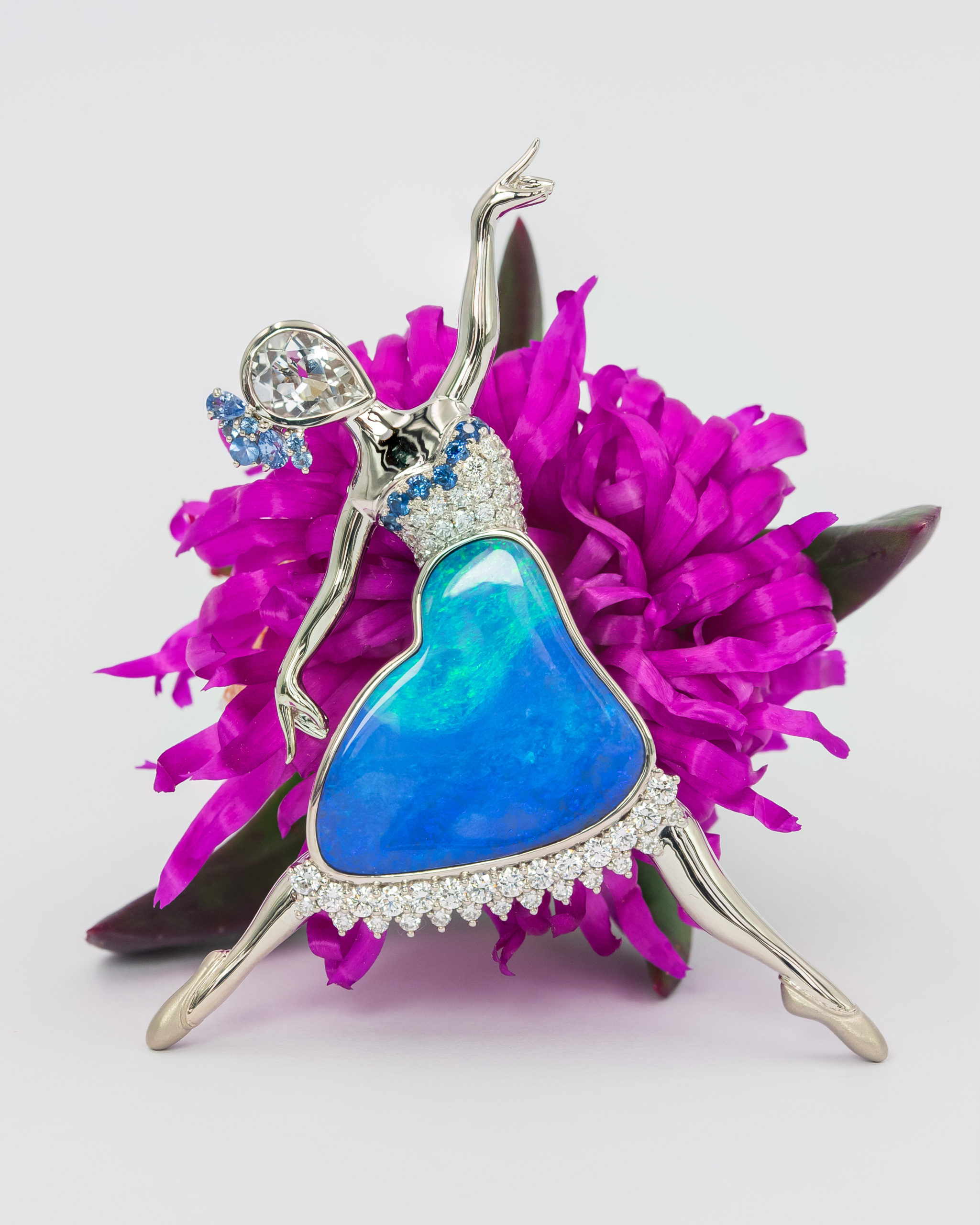
This ballet dancer skirt is shaped by the opal stone. Designed by Cindy Xu
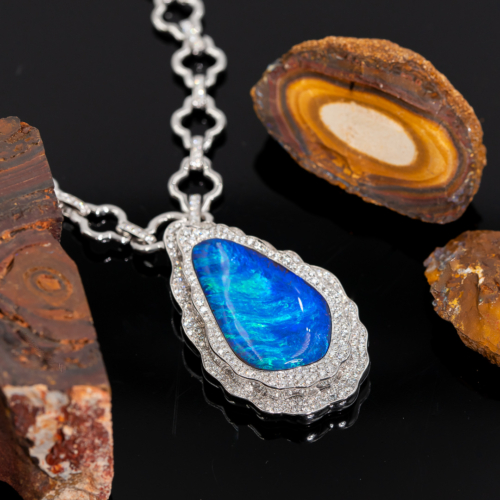
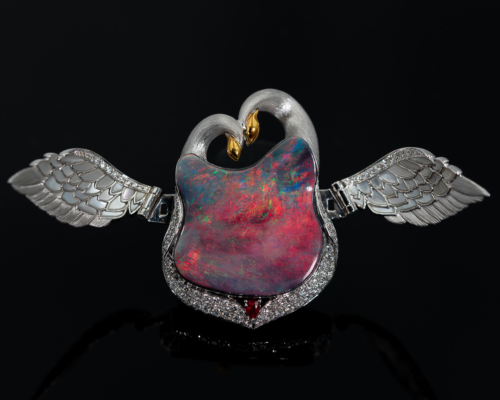
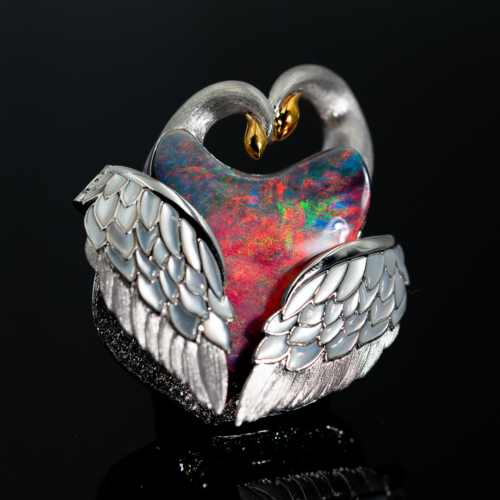
To achieve the best results, fine opals are often cut into larger or freeform shapes that retain as much play-of-colour as possible. These one-of-a-kind stones are then used in custom opal jewellery designs, such as Cindy Xu jewellery. Cindy designs her pieces based on the opal shape, colour and its individuality. This is why many high-end opal rings and pendants feature unique shapes.
In contrast, commercial-grade opals, such as white opal or assembled opals, are usually cut into standard sizes and shapes, most commonly oval. These more affordable opal jewellery options.
Place of origin
Australian sources frequently position Australian precious opal as premium and often more stable. Australian precious opals are generally considered the most stable and command the highest prices, while opals from Ethiopia and Mexico can be less predictable in durability. Geoscience Australia also notes Australia produces the vast majority of the world’s precious opal (95% on its fact page), underlining why “Australian opal” is a powerful buying signal. [4]
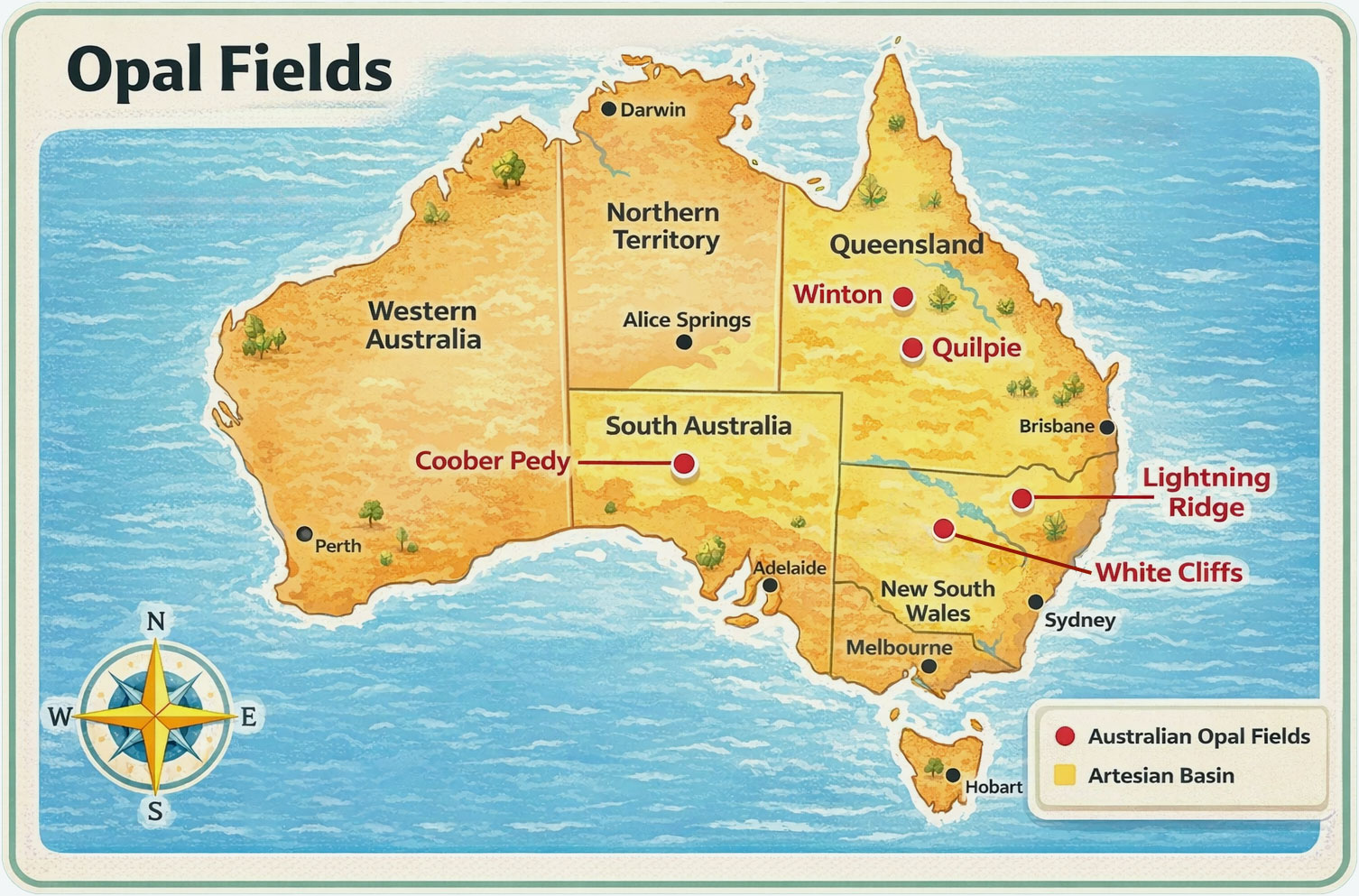
⛏️ The Lightning Ridge fields in far north NSW is the world’s only consistently mined source of Black Opal. Including the famous ‘Grawin Opal Field,’ known for its high-quality black opals formed in ancient marine sediment.
⛏️ Coober Pedy in South Australia was discovered in 1915, this where most of the ‘white’ or ‘milky’ and crystal opals (together known as a ‘light opal’) are mined.
⛏️ Quilpie and Winton in Queensland is famous for producing some of the finest and most unique boulder opals used in high-end opal jewellery.
Treatments and enhancements
While opals are not as commonly treated as other gems such as sapphires, there are a variety of opal treatments. Treated opals are less valuable than untreated opals.
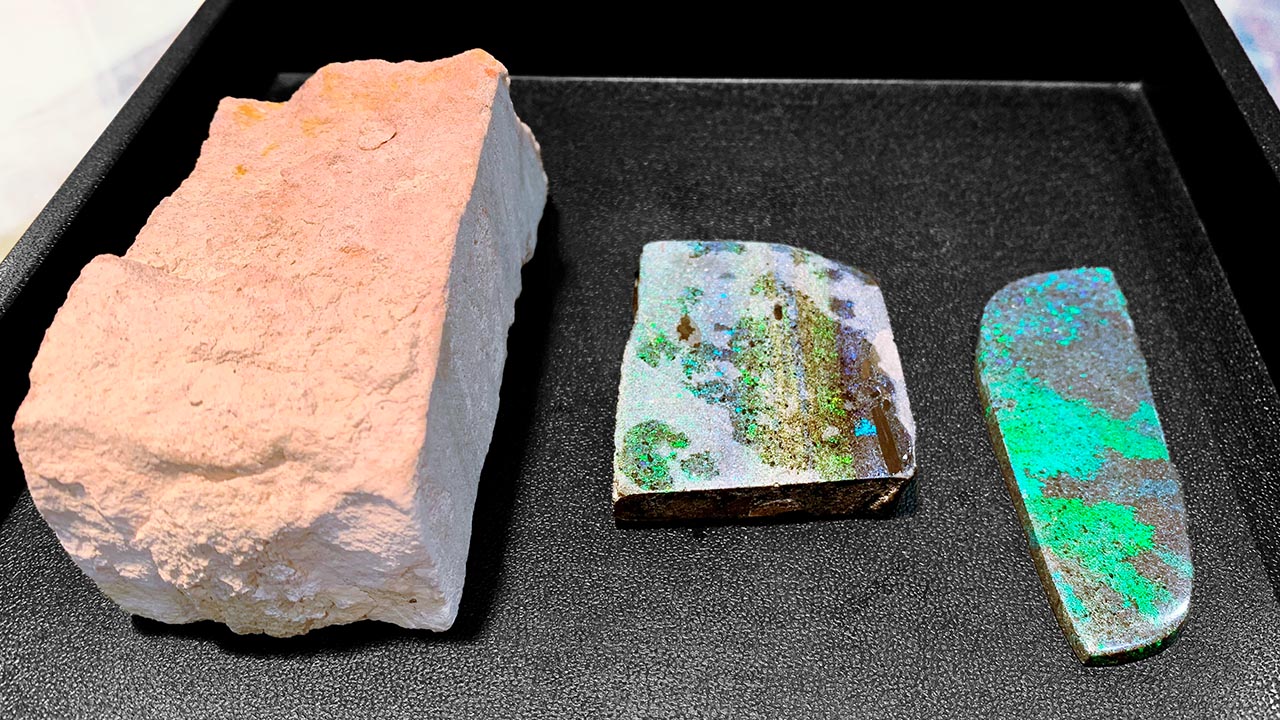
Common treatments include
- Sugar and acid treatment is a popular approach for enhancing opal. This procedure is often used to matrix opal from Andamooka, Australia, which is a very porous substance. The completed product is commonly known as “Andamooka matrix opal” or “Andamooka rainbow matrix opal” in the marketplace. This therapy was described as a hot sugar bath followed by a hot acid bath. [7]
- Smoking / dyeing often discussed in the context of creating darker-looking opals, including some Ethiopian material.
- Resin/impregnation, fracture filling/oiling, coatings used to improve durability or appearance. GIA research repeatedly shows dye/impregnation can occur in porous hydrophane opal and can be difficult to detect without careful examination.
Under CIBJO-aligned guidance summarised by the Opal Association, anything beyond cutting/polishing should be disclosed and specified in documentation. [2]
Comparison table for valuation
🔵 01 Opal type
Solid, boulder, matrix vs doublet/triplet
🟢 Increase value
Solid natural opal, natural types
🔴 Reduce value
Composite such as doublet or triplet
🟠 Buyer check
Is this solid opal, boulder/matrix, doublet or triplet?
🔵 02 Body tone
Background darkness (N1–N9)
🟢 Increase value
Darker tones, strong contrast
🔴 Reduce value
Tone alone without brightness/pattern
🟠 Buyer check
Compare stones of same tone, don’t pay for tone alone
🔵 03 Brightness
How vivid colour looks face-up (B1–B5)
🟢 Increase value
Bright colours visible beyond strong light
🔴 Reduce value
“Needs spotlight” to show colour
🟠 Buyer check
Shade the stone in your hand to check brightness.
🔵 04 Play-of-colour
The shifting rainbow of red, green or blue
🟢 Increase value
Multi-colour, strong intensity, good coverage
🔴 Reduce value
Dead spots, weak or patchy play
🟠 Buyer check
Rotate stone slowly, check under multiple lights
🔵 05 Pattern
Shapes/arrangements of colour patches
🟢 Increase value
Rare named patterns, strong distincted.
🔴 Reduce value
Indistinct or muddy patterns, grass or moss patterns
🟠 Buyer check
Check patterns are evenly distributed.
🔵 06 Clarity
Cracks, crazing, inclusions, potch lines
🟢 Increase value
Clean face, stable structure
🔴 Reduce value
Cracks, crazing, obvious face faults
🟠 Buyer check
Inspect with a loupe all jewellery store have them.
🔵 07 Cut & polish
Shape, dome, finish
🟢 Increase value
Symmetry, good dome, high luster
🔴 Reduce value
Too thin, dull polish
🟠 Buyer check
Look for even dome & clean polish lines
🔵 08 Origin
Where it was mined
🟢 Increase value
Credible origin, lighting ridge or Queensland.
🔴 Reduce value
Vague origin claim
🟠 Buyer check
For high value, get independent valuation
🔵 09 Treatments
Dye/smoke/sugar/resin
🟢 Increase value
Fully disclosed (and priced lower as appropriate)
🔴 Reduce value
Undisclosed enhancement
🟠 Buyer check
“Any treatments beyond cutting/polishing?”
Pricing guide examples
Most sellers value opal by assigning a price per carat based on the factors above, then multiplying by weight. For example, a black opal valued at $1,500/ct and weighing 3.6 ct totals $5,400. Remember the final retail price of opal jewellery include more than the stone. Such as design, metal (gold/platinum), diamonds and other gems used, labour, and brand.
Indicative price-per-carat
Price ranges (in USD) below are broad because quality varies enormously.
N1-N4
Black opal
🗺️Lighting Ridge, NSW
Full price range: $10–$20,000/ct
💵💵💵💵💵💵💵💵💵💵
Mid-range: $300–$1,400/ct
N1-N9
Boulder opal
🗺️Western Queensland
Full price range: $10–$8,000/ct
💵💵💵💵💵💵
Mid-range: $90–$600/ct
N5–N6
Dark opal
🗺️Lighting Ridge, NSW
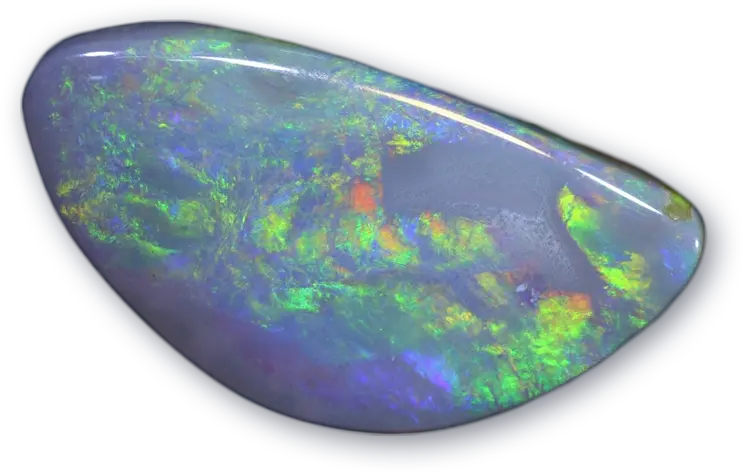
Full price range: $10–$7,000/ct
💵💵💵💵💵
Mid-range: $300–$1,200/ct
N7-N8 Semi transparent
Crystal opal
🗺️Coober Pedy, SA
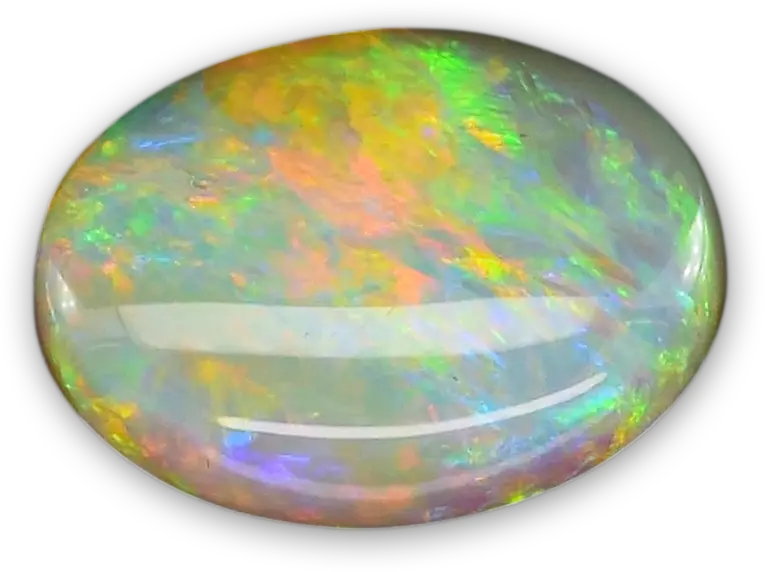
Full price range: $10–$6,000/ct
💵💵💵💵
N7-N9
White opal/light opal
🗺️Coober Pedy, SA
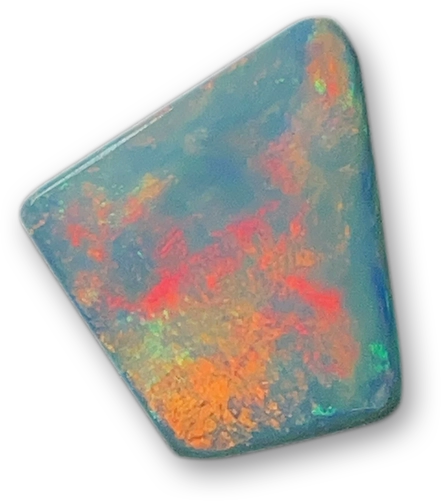
Full price range: $10–$6,000/ct
💵💵💵💵
Mid-range: $15–$500/ct
Composite
Doublet opal
🗺️Various opal fields
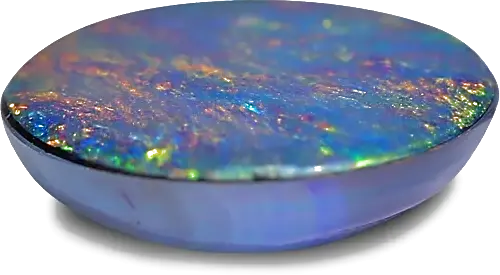
Full price range: $1–$230/ct
💵💵
Composite
Triplet opal
🗺️Various opal fields
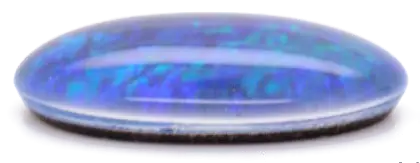
Full price range: $1–$170/ct
💵
Purchasing scenarios
Scenario A 💎
Entry-level opal jewellery (gift budget)
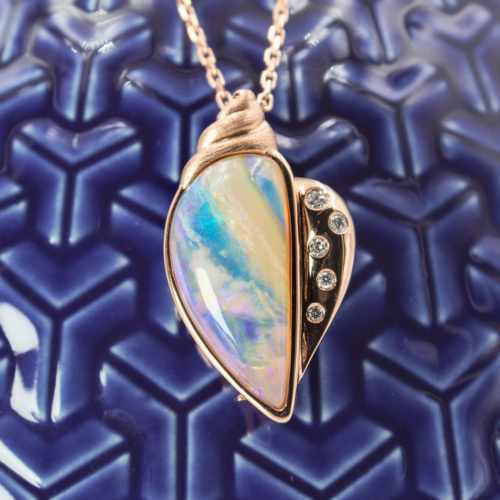
A light/white opal with modest brightness (B5–B7 style appearance) or a small boulder opal with limited colour coverage can be attractive and wearable without being expensive. Light opal is more abundant and generally more affordable. You can find them on earrings or pendants, or rings with protective settings. [8]
Scenario B 💎💎
Mid-range statement opal jewellery (value for money)
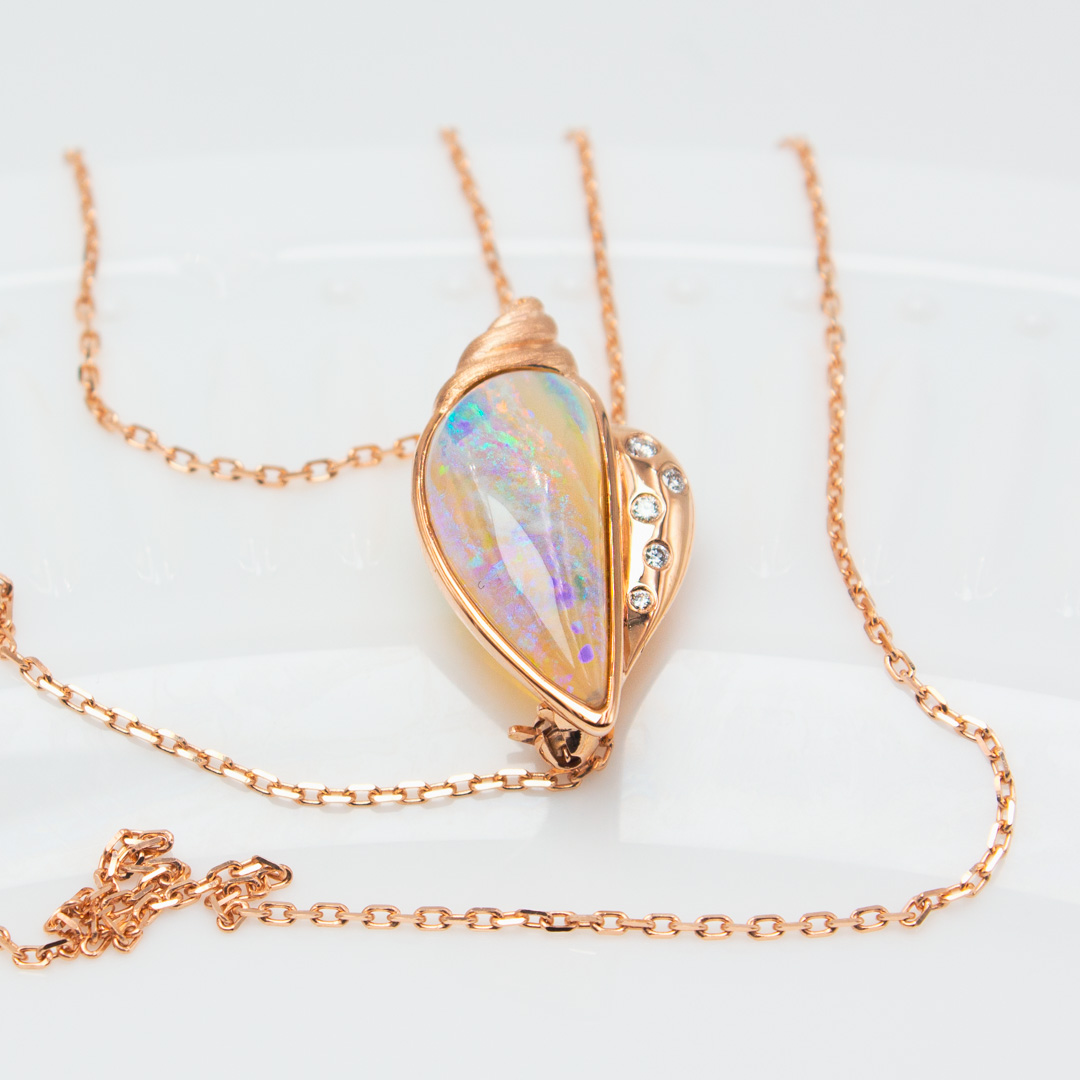
Many buyers get the best visual impact by prioritising brightness + pleasing pattern, even if body tone is not the darkest, and by choosing a cut that shows colour in normal wear angles. Boulder opal can be a good choice that “punch above its weight” visually due to natural contrast with ironstone backing.
Scenario C 💎💎💎
High-end black opal (collector jewellery)
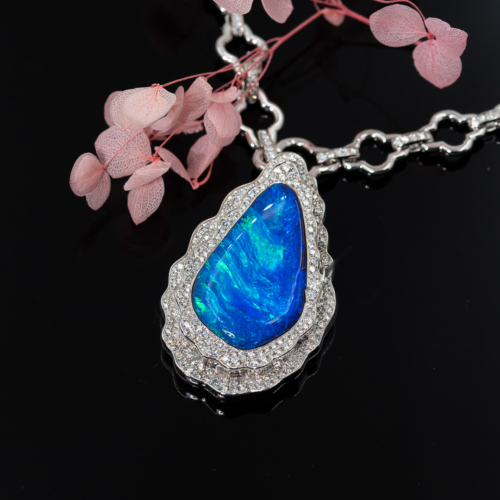
A very dark tone black opal (N1–N4), high brightness, multi-colour (especially red), and rare pattern can push per‑carat prices into the thousands (and beyond). For this tier, a custom made jewellery piece that is designed for the opal is recommended, along with independent documentation matters. [5]
Buying opals online
Opal is famously difficult to photograph, even the same stone can look dramatically different photo-to-photo depending on angle and lighting, and reputable sellers acknowledge this challenge.
A safe online check list:
- Request a slow rotation video (not just still photos).
- Ask for colour-play shown in neutral indoor light + daylight.
- Require the listing/receipt to state opal’s construction (solid/doublet/triplet), any treatments, and (if claimed) origin. [2]
Getting a valuation in Australia
If you’re spending enough that insurance or resale matters, plan for a professional valuation. NCJV (National Council of Jewellery Valuers) states that valuation requires training and ongoing professional development, and warns that Australian law doesn’t require tertiary qualifications to practise as a valuer, so do check for professional registration. [5]
Common pitfalls in opal buying
Opal buying risks are usually about misdescription and non-disclosure, not about opal being “mysterious.”
FAQs
❓ What’s the difference between precious opal and common opal?
Precious opal shows play-of-colour because of an orderly silica-sphere microstructure that diffracts light, common opal/potch lacks that play-of-colour. [2]
❓ What does N1–N9 mean in opal grading?
It’s a body tone scale (background darkness/lightness). N1–N4 are black opal tones, N5–N6 dark opal, and N7–N9 light opal (with N9 commonly called white opal). [2]
❓ What does B1–B7 mean?
A brightness scale where B1 is brilliant and B7 is dull, brighter colour tends to command higher value.
❓ Are black opals always more valuable than white opals?
Often, but not always. Darker body tone can boost contrast, but value depends on brightness, pattern, colour combination, and overall attractiveness; exceptional white/light opals can be very valuable.
❓ Do opals crack easily?
Opal’s water content and relative softness mean it can be vulnerable to damage under impact or harsh cleaning/temperature shock. Hydrophane opal in particular can have durability risks when water is absorbed.
❓ Should I get an opal valuation for insurance?
If the piece is valuable to you, yes. NCJV emphasises that proving current value supports insurance outcomes, and that using a registered professional valuer can reduce risk. [10]
Conclusion
In the world of opal jewellery, no two stones are ever exactly the same. Each opal has its own unique combination of color, pattern, and brightness, which makes valuation more subjective compared to other gemstones.
Unlike diamonds, which are graded using standardized systems for clarity, color, and cut, opals do not follow a fixed pricing chart. This is because their beauty lies in their individuality, especially in natural Australian opals where the play-of-colour can vary dramatically from one stone to another. As a result, understanding opal value and price often relies on the trained eye of an experienced professional. If you are unsure about the value of an opal, seeking a second opinion or visit our boutique in Sydney at Cindy Xu Eternal Jewelry, Cindy and her team can help you make a confident and informed decision.
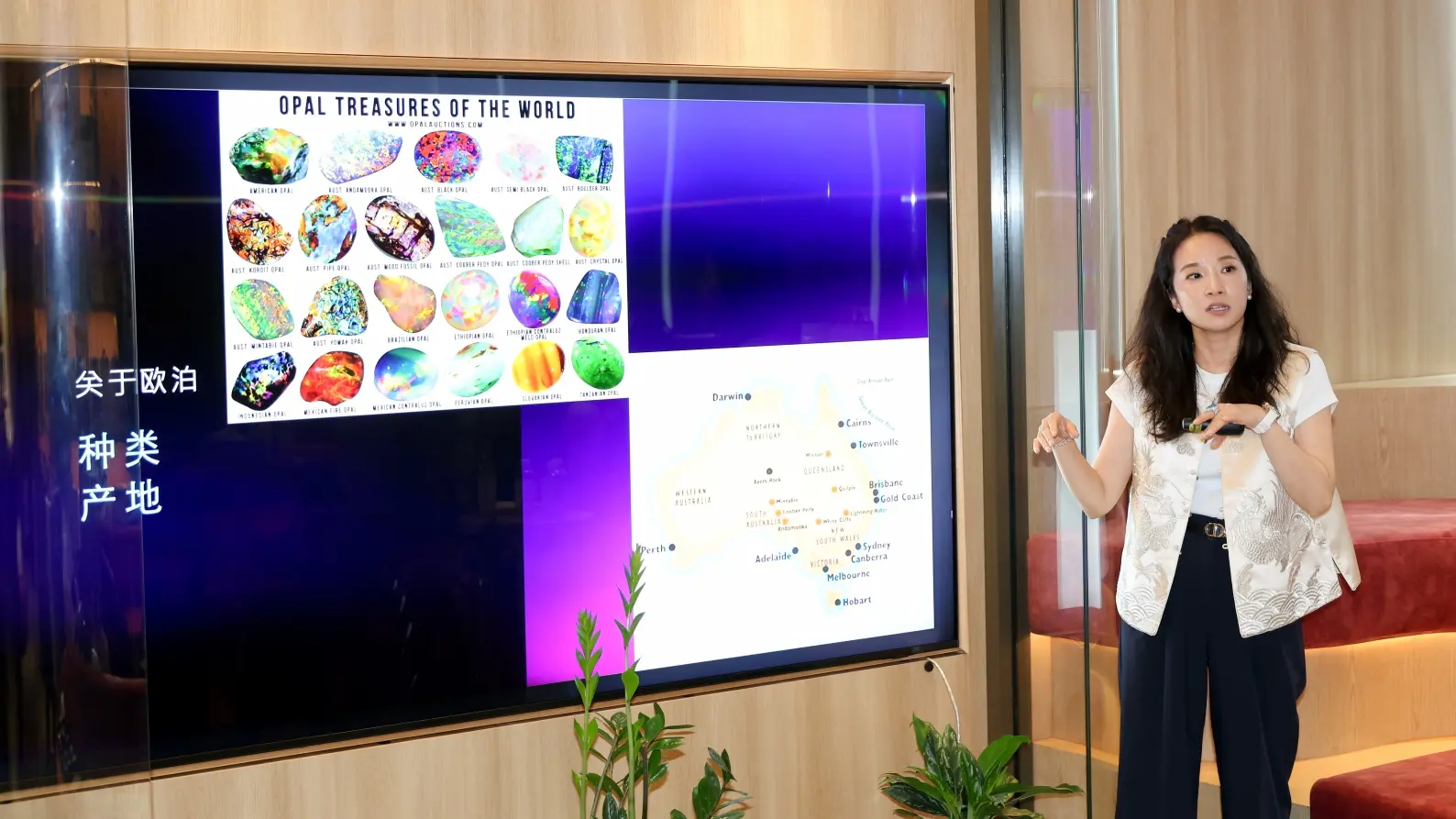
Cindy giving a talk on opal valuation
Reference list
- GIA gem encyclopedia opal
https://www.gia.edu/opal/gem-overview - Opal Association of Australia — Opal Industry Nomenclature (GAA-derived definitions; treatments/disclosure summary)
https://www.opal.asn.au/opal-information/opal-industry-nomenclature/ - CIBJO (International Jewellery Confederation) — Gemstone Blue Book (composite naming/disclosure)
https://cibjo.org/wp-content/uploads/2022/08/CIBJO-Gemstone-Blue-Book-2020-12-01.pdf - Geoscience Australia Australian mineral facts on opal
https://www.ga.gov.au/education/minerals-energy/australian-mineral-facts/opal - National Council of Jewellery Valuers Valuation and Assessment
https://www.ncjv.com.au/valuation-and-assessment - Government of South Australia Energy & Mining
https://www.energymining.sa.gov.au/industry/minerals-and-mining/mineral-commodities/opal - GIA Sugar/Heat-Treated Opal
https://www.gia.edu/gems-gemology/spring-2022-gemnews-sugar-heat-treated-opal